Identifying the Theme of a Poem
Lesson Objectives
- In this lesson, students will learn to use details in a text to identify the theme of a poem.
- In this lesson, students will identify the key differences between the main idea and the theme of a poem.
Lesson Objectives
What is poetry?
Poetry is one of the oldest ways to express deep emotions about life. Poetry is art in wordform. Poetry can make you laugh, cry, or get angry as a result of the author's chosen words of expression. Poetry can also hold different meaning for each person who reads it.
In this lesson, you are going to learn how to identify the theme, or the central message, of a poem.
Before we begin your lesson, we need to find out what you already know about identifying a poem's theme.
Directions: Read the statements and choose the best answer.
Focus Question:
Have you ever read a poem and wondered what it means? Poetry is not always straight forward. Poets often use metaphors to express their feelings and deliver a message to their readers.
Determining the theme of a poem can help you identify the author's central message.
Are the Main Idea and Theme of a poem the same thing? NO!
What is the difference between the Theme and the Main Idea?

Now that you know the difference between Main Idea and Theme, let's talk about the key steps to identifying the theme of a poem.
Identifying the theme of a poem in 5 easy steps:
Ask yourself these key questions!
a figure of speech in which a word or phrase is applied to an object or action to which it is not literally applicable. "her poetry depends on suggestion and metaphor"
A Central Message is the Big Idea of the story. Examples of a Central Message: Friendship is important, love, value your family, hard work pays off, be yourself
Sometimes, it is easier to find the theme of a poem if we can relate the story to our own life. Let's practice now!
The Voice by Shel Silverstein
There is a voice inside of you
That whispers all day long,
"I feel this is right for me,
I know that this is wrong."
No teacher, preacher, parent, friend
Or wise man can decide
What's right for you--just listen to
The voice that speaks inside.
Use the graphic organizer to determine the meaning of this poem:
NOTE: make sure to use TEXT from the poem to answer the question and then make a personal connection.
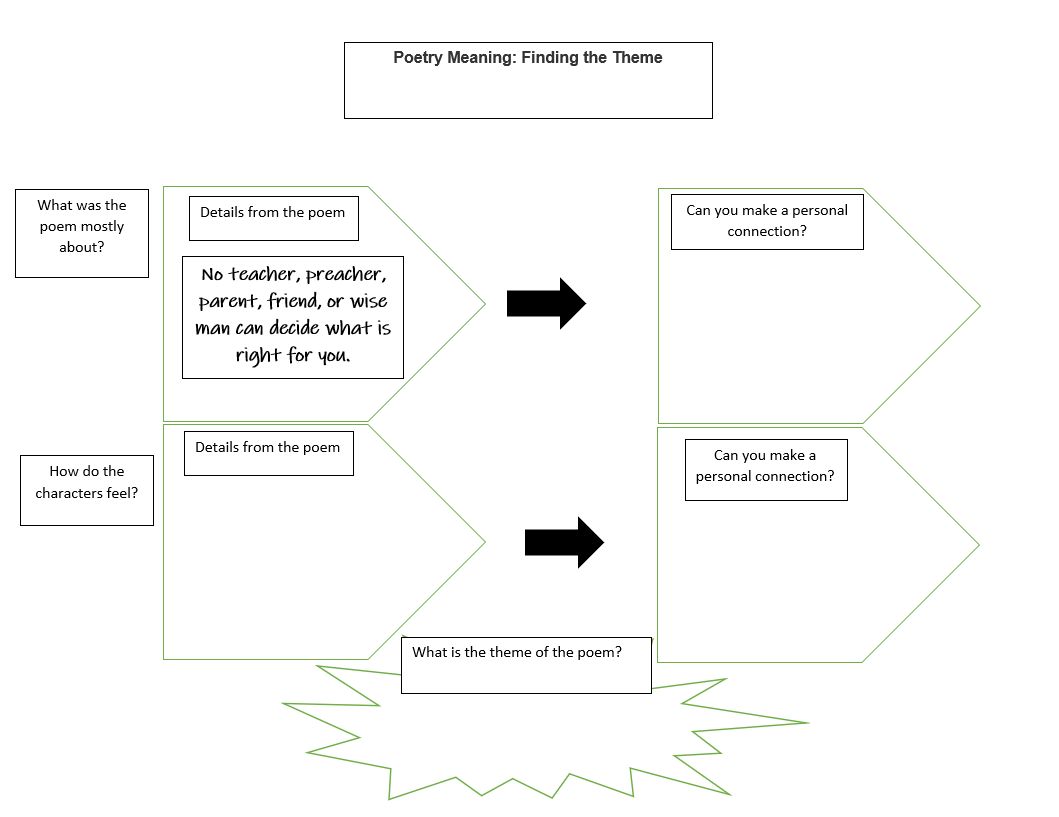
After reading The Voice by Shel Silverstein, follow the steps in the lesson to identify the theme of the poem.
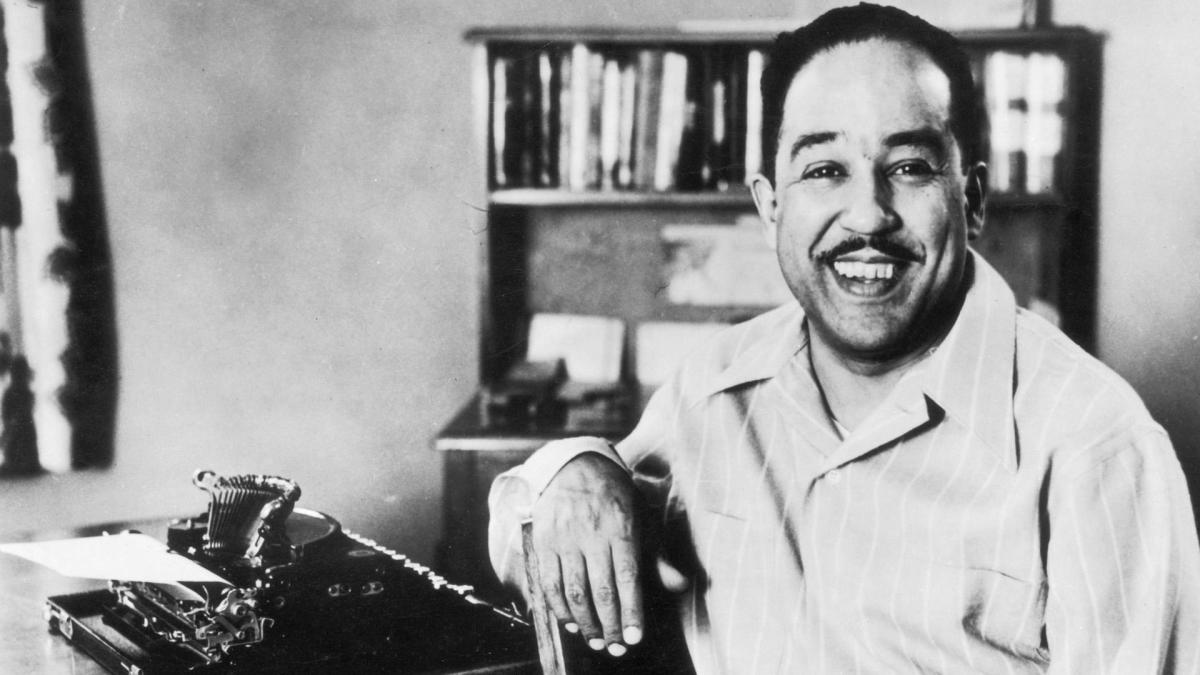
Hold fast to dreams
For if dreams die
Life is a broken-winged bird
That cannot fly.
Hold fast to dreams
For when dreams go
Life is a barren field
Frozen with snow.
Now, let's see what you learned today about identifying a poem's theme.
Read the questions below and fill in the missing words.
Licensed under the Creative Commons Attribution Share Alike License 4.0